
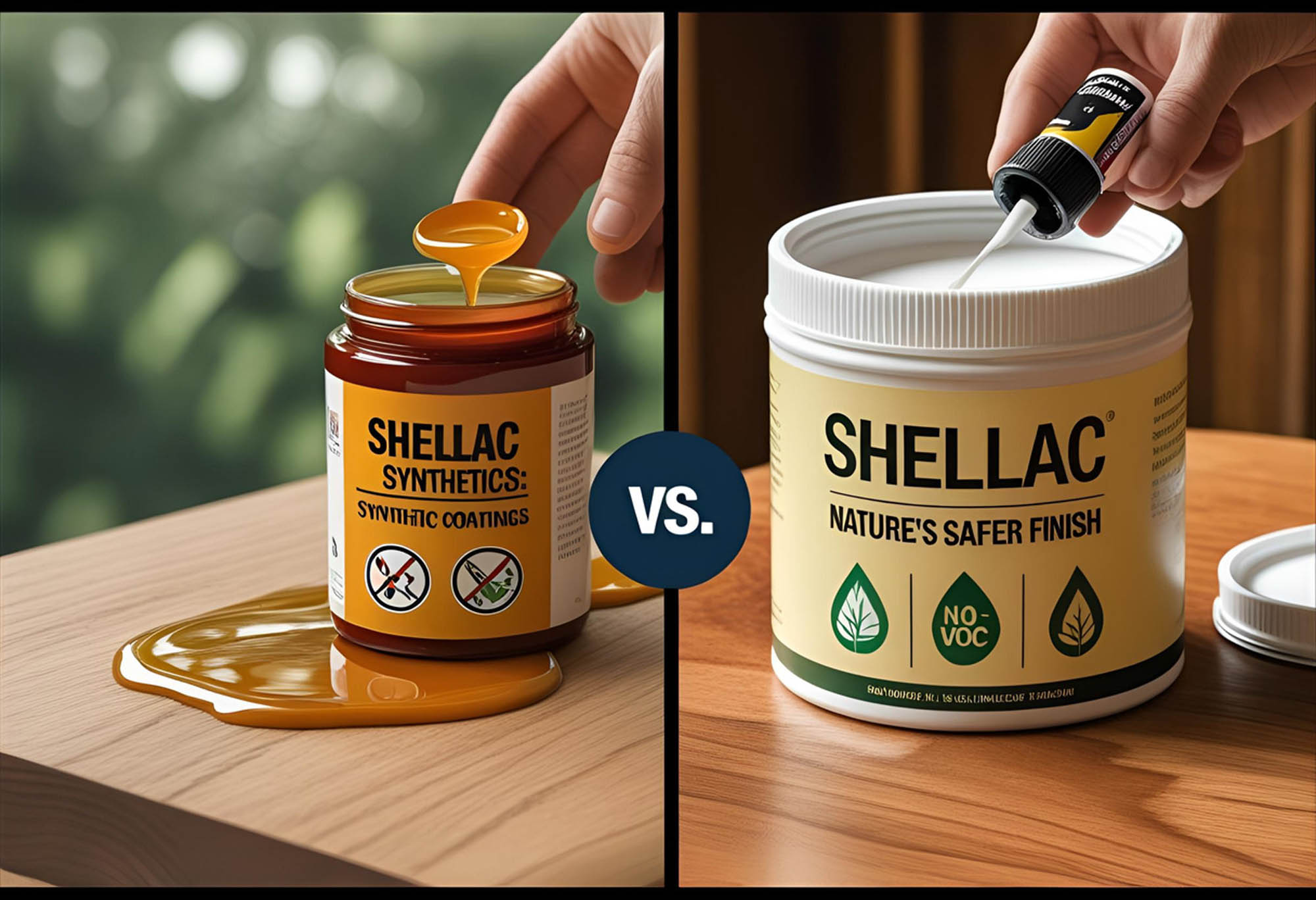
Shellac has been used for centuries as a natural coating and finish, from fine furniture to pharmaceutical pills. In today’s market, synthetic alternatives such as polyurethane, acrylics, and epoxy resins have become more common—but how does shellac actually compare in performance, safety, and environmental impact?
Shellac is a natural resin, harvested sustainably from the lac insect and processed without harsh chemicals. It is widely appreciated for its quick-drying properties, glossy finish, and excellent adhesion. In wood finishing, shellac is prized for enhancing natural grain while offering a warm, amber hue. Its ability to bond to virtually any surface also makes it ideal in industries like food, pharmaceuticals, and cosmetics.
In contrast, synthetic coatings like polyurethane and acrylics are petroleum-based and involve intensive chemical processing. These products often release VOCs (volatile organic compounds) into the air during and after application—posing health risks and contributing to environmental pollution. While synthetics may provide high durability and water resistance, they lack the biodegradability and renewability that shellac offers.
Another key advantage of shellac lies in its non-toxic profile. It’s safe for food contact, edible coatings, and medicinal use—an area where synthetic resins typically fall short. However, it’s worth noting that shellac has a lower resistance to heat and water than some synthetics, making it more suitable for indoor applications and items not exposed to extreme conditions.
Ultimately, the choice between shellac and synthetic coatings depends on the intended use. But for consumers and manufacturers seeking a more natural, eco-friendly, and health-conscious alternative, shellac presents a compelling case. It blends tradition with functionality, offering a beautiful finish that’s kind to people and the planet.


